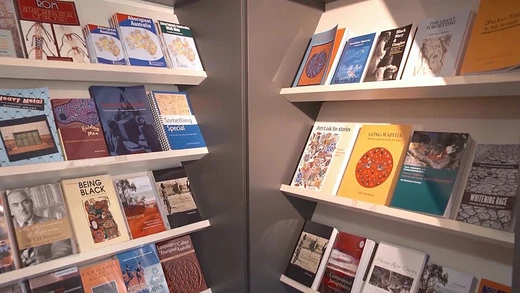
Magazine
A periodical storehouse of articles for targeted audiences.

Slobodan D. Živojinović · CC0
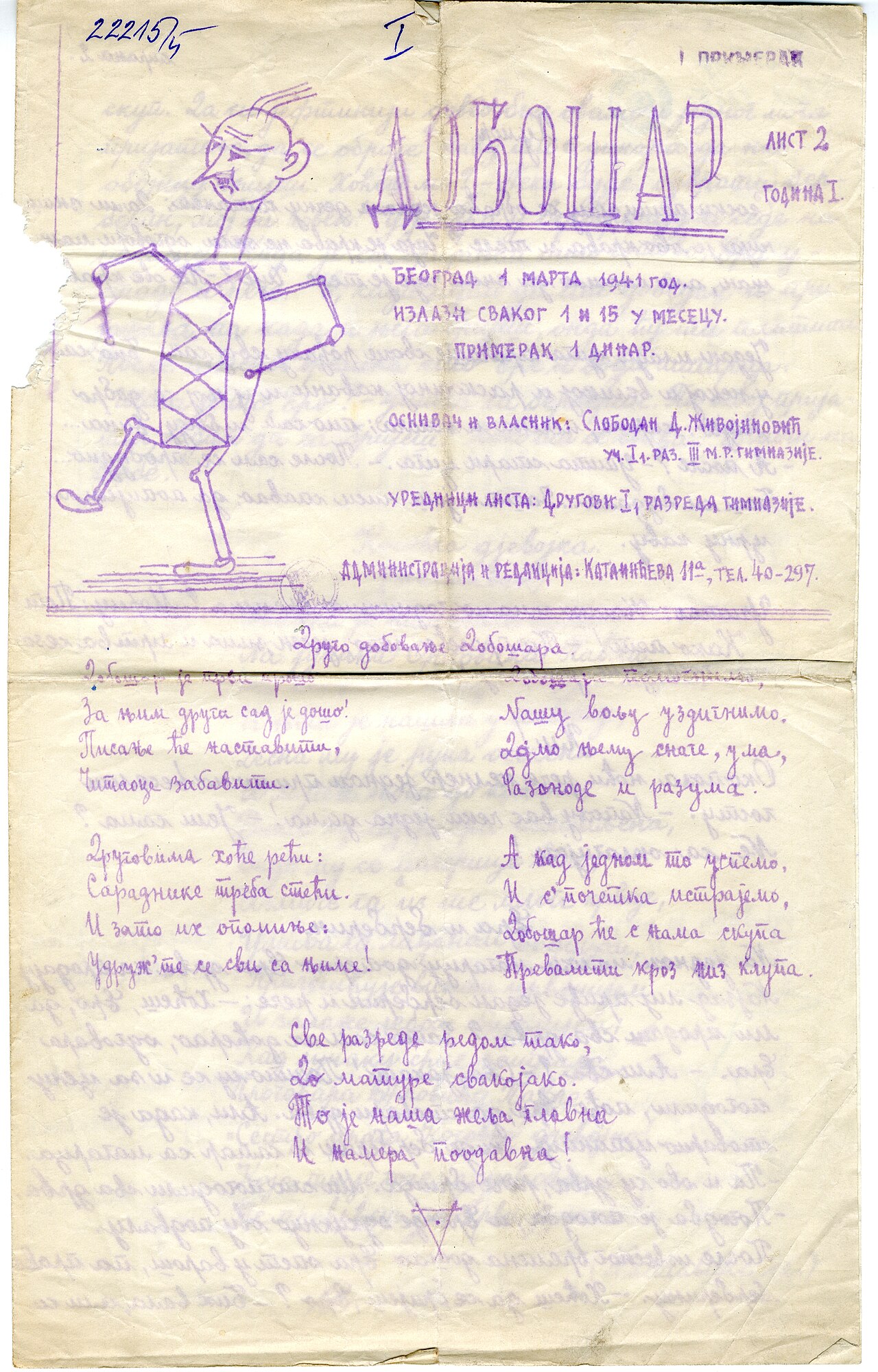
A magazine is a periodical publication, issued in print or digital form at regular intervals, that contains a collection of articles, essays, stories, photographs, illustrations, or other content intended for a particular audience. Magazines are generally financed by advertising, purchase price, prepaid subscriptions, or a combination of the three, and are categorized by frequency, target audience, subject focus, and tone. The term derives from the Arabic makhāzin ("storehouses"), reflecting the idea of a publication serving as a storehouse of information.
- first_known_magazine
- Erbauliche Monaths Unterredungen (1663, Germany)
- term_origin
- Arabic makhāzin (storehouses), via Middle French and Italian
- distribution_models
- Paid, Non-paid, Controlled circulation
Lore & Background
The earliest example of a magazine was Erbauliche Monaths Unterredungen, a literary and philosophy magazine launched in 1663 in Germany. The French press lagged behind the British, catering to the aristocracy while British counterparts oriented toward the middle and working classes. Magazines are distributed through mail, newsstands, bookstores, or free pick-up locations. Electronic distribution includes social media, email, and news aggregators. The traditional subscription business models are paid circulation (sold per issue or by subscription), non-paid circulation (given away free), and controlled circulation (free to qualifying readers, often used by trade magazines).
Reader's Guide
Magazines have historically served as storehouses of information, entertainment, and targeted content for specific audiences. Their significance lies in their ability to shape public opinion, reflect cultural and political currents, and provide a platform for specialized knowledge. The distinction between magazines and journals—magazines aiming to entertain, inform, or educate a general audience, while journals present recent research for experts—highlights their role in accessible communication. The controlled circulation model, widely used before the rise of the World Wide Web, allowed trade magazines to deliver advertisements precisely to target audiences, avoiding wasted distribution costs. Appearance on the cover of print magazines has historically been understood to convey a place of honor or distinction. Magazines have also played roles in political change, as seen in France during the Revolution, where periodicals like Jean-Paul Marat's L'Ami du peuple served as propaganda organs. The legacy of magazines persists in digital forms, adapting distribution models to new media while retaining their core function as periodical collections of curated content.
Did You Know?
- The word 'magazine' derives from the Arabic makhāzin, meaning 'storehouses,' and originally referred to a storage space or device.
- The earliest magazine was Erbauliche Monaths Unterredungen, a literary and philosophy magazine launched in 1663 in Germany.
- Edward Cave, editor of The Gentleman's Magazine, is widely credited as the first to apply the term 'magazine' to a periodical publication.
Origins & Five Generations of Family Stewardship
The story of what is now Bauer Media Group begins in 1875, when a 23-year-old German lithographer named Johann Andreas Ludolph Bauer opened a modest printing shop in Hamburg. His initial specialty was producing business cards—a humble start for what would become a global multimedia powerhouse. The enterprise passed to his son Heinrich Friedrich Matthias, then to grandson Alfred, who joined in 1918 and became a partner by 1935. By 1903, the firm had already expanded into newspaper ownership with the Rothenburgsorter Zeitung and a stationery business, adding a high-speed printing press and typesetting machine to its toolkit while employing roughly 20 staff. What makes the company's lineage remarkable is that five successive generations of the Bauer family have guided its management. In November 2010, Yvonne Bauer—Heinz Heinrich's daughter—assumed the role of CEO and 85% owner after joining the family business in 2005, ensuring the enterprise remained firmly in the hands of its founding bloodline even as it grew to encompass over 600 magazines, 400 digital products, and 50 radio and TV stations across 17 countries with approximately 11,000 employees.
Shadows of the Nazi Era & the Path to Accountability
One of the most uncomfortable chapters in Bauer's corporate history involves its relationship with the Nazi regime. In 1939, CEO Alfred Bauer joined the Nazi Party, and research published in 2020 by Norddeutscher Rundfunk's media magazine Zapp and Der Spiegel revealed that the company's publication Funk-Wacht (Radio Watch) displayed a clear proximity to Nazi ideology. The journal had enjoyed commercial success partly through ingratiation with the regime, though it was ultimately discontinued in 1942 simply because paper shortages made production impossible. Rather than leaving this period unexamined, the company took a significant step in 2024 by commissioning a comprehensive historical study from the Historiker-Genossenschaft eG, a cooperative of professional historical researchers, to scrutinize the group's conduct during the Nazi era. The findings were subsequently published, representing a rare instance of a major media corporation formally investigating and disclosing its own dark past. This episode stands as a reminder that the company's long, family-held history carries complexities that extend well beyond its commercial achievements.
Conquering the British Newsstand
Bauer's foray into the United Kingdom began in 1987 with the launch of Bella, a women's weekly magazine that marked the company's first publishing venture across the Channel. From that single title, the operation grew into Britain's third-largest publisher under the H Bauer Publishing banner. The 1990s saw a steady stream of new launches: Take a Break arrived in 1990, that's life! followed in 1995, and a family of puzzle magazines carried the Take a Break name. The TV listings segment proved particularly fertile ground. After the March 1991 deregulation freed the market from the legal monopoly of Radio Times and TV Times, Bauer launched TV Quick in 1991, which ceased in 2010. Then in 1999, TV Choice struck gold at a price point well below competitors, overtaking its main rival by the February 2008 audited circulation figures to become the number-one weekly newsstand magazine in the UK. Total TV Guide, launched in September 2003, addressed the growing complexity of Freeview and satellite programming. The 2008 acquisition of Emap Consumer Media and Emap Radio further cemented Bauer's dominance, adding brands like heat, Grazia, KISS FM, and Magic to the portfolio.
Music Media, Controversy, and the Shifting Landscape
Bauer's music publishing division has been both celebrated and contentious. The Q brand, originally conceived under the working title Cue before being renamed to avoid confusion with a snooker publication, expanded from a monthly magazine into radio, television, and annual Q Awards. Kerrang!, acquired in 2008, brought a dedicated rock-music magazine, a radio station launched in 2004, and a TV channel into the Bauer fold. However, the relationship with creative contributors soured in spring 2010, when Bauer attempted to impose a unilateral new contract on photographers and writers across Q, Kerrang!, and Mojo. The terms would have stripped contributors of their copyright and shifted libel and infringement liability onto them. Around 200 contributors reportedly refused to work under those conditions. The music publishing landscape continued to shift, and in 2020 Bauer closed Q magazine alongside Planet Rock, as no buyer could be found to continue the publications beyond Q's 415th issue. This closure, along with the discontinuation of Simply You, Practical Photography, and Modern Classics, marked a significant contraction in Bauer's once-extensive print music portfolio.
Gallery

Frequently Asked Questions
What is a magazine in publishing terms?
A magazine is a recurring publication—either printed or digital—that bundles together articles, photos, essays, and other content aimed at a specific readership. It sits between a newspaper and a book in format, typically released on a set schedule such as weekly, monthly, or quarterly.
Where does the word 'magazine' come from?
The term traces back to the Arabic word makhāzin, meaning 'storehouses,' which conveyed the idea of a collection or repository of knowledge. It passed through Middle French and Italian before settling into English with its current publishing meaning.
How do magazines make money and reach readers?
Magazines typically fund themselves through a mix of advertising revenue, retail sale prices, and prepaid subscriptions. Their distribution models are generally classified as paid, non-paid, or controlled circulation, depending on how copies reach the audience.
More in Media And Publishing 1-24
Spotted an error? Know more?
This is a living reference — every entry is fact-audited, and reader corrections feed straight into our audit queue. Suggest an edit · See this site's audit record