
Journalism
Journalism informs society through verified reports on events and ideas.

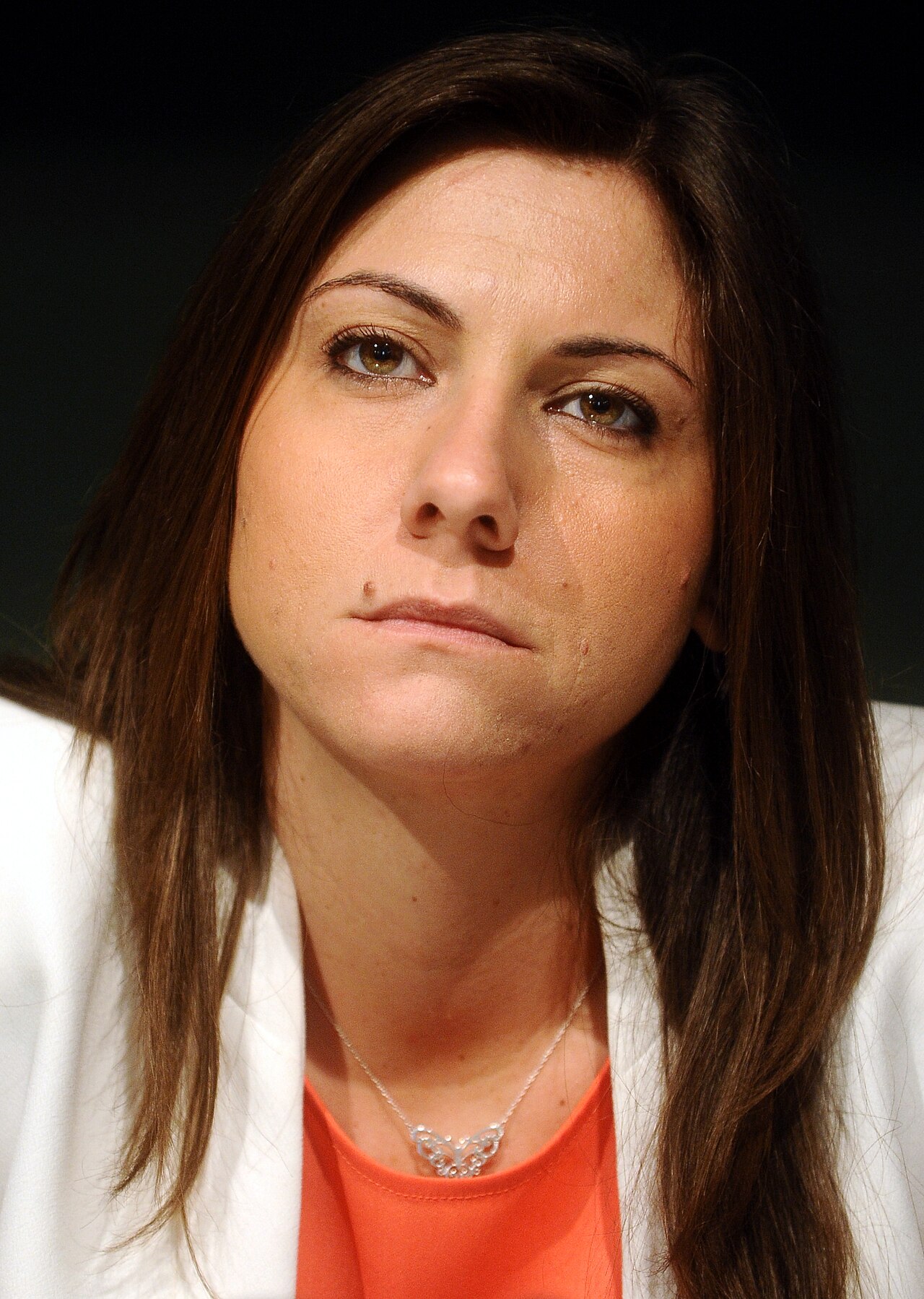
Niccolò Caranti · CC BY-SA 4.0
Journalism is the production and distribution of reports on events, facts, ideas, and people that constitute the 'news of the day' and inform society with a commitment to accuracy and verification. The word applies to the occupation, the methods of gathering information, and the organizing literary styles. The role of journalism varies across countries, as do perceptions of the profession and its status, with some nations having government-controlled media and others operating independent private enterprises.
- field
- Media and Communication
- known_for
- Production and distribution of news reports with a commitment to accuracy and verification
- forms
- Access, advocacy, broadcast, business, citizen, data, drone, global, gonzo, interactive, investigative, long-form, photojournalism, political, science, sensor, sports, student, tabloid, visual, war, a
Lore & Background
Journalism is produced by media organizations or individuals, with conventions varying by country. In the United States, bloggers are often regarded as journalists, and the Federal Trade Commission requires disclosure of promotional gifts to eliminate conflicts of interest. Many credible news organizations are incorporated entities with editorial boards and separate editorial and advertising departments, often belonging to professional organizations such as the American Society of News Editors or the Society of Professional Journalists. When crafting news stories, fairness and media bias are concerns, with some stories representing the author's own opinion and others featuring balanced points of view.
Reader's Guide
The rise of the internet and digital media has significantly changed how people access and consume information, with a growing preference for online sources. This shift has contributed to the decline of traditional print newspapers, as audiences increasingly access news through e-readers, mobile devices, and digital platforms. News organizations face ongoing challenges in monetizing digital content and adapting print models to evolving consumption patterns, with print revenues declining more rapidly than digital income streams have grown. The rise of social media has drastically changed journalistic reporting, giving rise to citizen journalists. A 2014 study of journalists in the United States found that 40% relied on social media as a source, though only 30% thought it had a positive influence on news credibility. This has led to arguments for reconsidering journalism as a process distributed among many authors, including the socially mediating public, rather than as individual products written by dedicated journalists. Credibility ratings of news outlets have reached an all-time low, with a 2014 study revealing that only 22% of Americans reported a 'great deal' or 'quite a lot of confidence' in either television news or newspapers.
Did You Know?
- In the United States, the Federal Trade Commission requires bloggers who write about products received as promotional gifts to disclose that they received the products for free.
- A 2014 study of journalists in the United States found that 40% claimed they rely on social media as a source, with over 20% depending on microblogs to collect facts.
- A 2021 study by Pew Research Center shows that 86% of Americans are getting their news from digital devices.
A Global Tapestry of Professional Norms
Across the globe, roughly four hundred distinct codes govern how journalists gather, edit, and share news. Though these documents emerge from varied cultural traditions and differ in their level of detail, they converge on a shared set of values: truthfulness, accuracy, fact-based communication, independence, objectivity, impartiality, fairness, respect for others, and public accountability. Professional journalism associations and individual newsrooms—whether in print, broadcast, or digital media—typically articulate these principles in formal statements that serve as both a public commitment and an internal compass for daily work.
What makes this landscape particularly interesting is the tension that sometimes arises between these broadly Western-framed standards and the journalistic practices of non-Western and Indigenous communities. The codes do not exist in a vacuum; they reflect the societies that produced them while simultaneously aspiring to universal ideals. This duality means that a reporter in one country may face ethical expectations that differ in emphasis from a colleague elsewhere, even when both are striving toward the same fundamental goal of informing the public honestly and fairly.
Protecting the Vulnerable: The Principle of Limited Harm
Embedded within most journalistic ethical frameworks is a principle often called the limitation of harm. In practice, this means that reporters and editors must weigh the public's right to know against the potential damage their words might cause. Concrete examples include withholding the names of minor children or crime victims, and omitting details that are not materially essential to the story but could damage someone's reputation or place them in undue danger.
The debate extends into sensitive territory such as suicide and mental-health coverage, where the journalism community has grappled with the precise language and framing used in reporting. In Europe, several professional codes go further by explicitly addressing discriminatory language tied to race, religion, sexual orientation, and physical or mental disability. The Parliamentary Assembly of the Council of Europe reinforced these concerns in its 1993 Resolution 1003, urging journalists to uphold the presumption of innocence—especially in cases still under judicial review. Together, these provisions create a layered shield around individuals who might otherwise be swept into the public record without consent or protection.
Institutions, Initiatives, and the Pursuit of Self-Regulation
Although the practice of journalism stretches back roughly four centuries, the formal codification of professional standards accelerated dramatically in the twentieth century as newspapers became essential to mass communication. The United States and European nations took the lead in drafting and adopting written codes, though similar documents now exist in most countries that guarantee press freedom.
In 2008, the International Federation of Journalists launched a global Ethical Journalism Initiative designed to raise awareness of professional standards within news organizations worldwide. Five years later, former IFJ General Secretary Aidan White founded the Ethical Journalism Network, a coalition of international and regional media associations that campaigns for ethics, good governance, and self-regulation across every media platform. In the United States, the Society of Professional Journalists remains a prominent voice, its code declaring that public enlightenment underpins justice and democracy. The Radio Television Journalism News Association similarly centers its standards on public trust, truthfulness, and accountability. Scholar Jesse Hearns-Branaman adds that professionalism ultimately rests on a blend of socialization into the craft and an ongoing capacity for self-criticism and healthy scepticism.
The Architecture of Accuracy in Practice
Accuracy is not an abstract ideal in journalism; it is operationalized through specific, day-to-day rules that reporters must follow under tight deadlines and limited space. A foundational guideline distinguishes between events witnessed by a single person, which must be reported with clear attribution, and events corroborated by two or more independent eyewitnesses, which may be stated as fact. Controversial claims always require attribution, and publishers are encouraged to have a second employee independently verify key details before publication.
In specialized fields such as medical and science reporting, a hierarchy of evidence further guides which sources carry the most weight. The broader point is that accuracy is not a single act but a continuous discipline: choosing reliable sources, quoting precisely, and using language that reflects what was actually said. When these standards slip, the damage extends beyond a single story. Audiences notice gaps in rigor, and once trust erodes, the entire mechanism by which information reaches the public becomes suspect. The 2018 Acton Plan emerged as one institutional response to reinforce these verification practices across newsrooms.
Gallery




Frequently Asked Questions
What is Journalism?
Journalism is the practice of gathering, producing, and distributing reports on current events, facts, and ideas to inform the public, grounded in a commitment to accuracy and verification. It covers the occupation, the methods of information-gathering, and the literary styles used to organize reporting.
What are the main forms of Journalism?
Journalism spans a wide range of subfields, including investigative, broadcast, photojournalism, citizen, data, sports, war, and long-form reporting, among many others. Each form approaches news collection and presentation through distinct techniques and editorial styles.
What is Journalism's core role in society?
Journalism serves as a primary channel through which the public receives verified information about events, people, and ideas that make up the day's news. Its fundamental commitment to accuracy and verification allows society to stay informed and make sound decisions.
How does Journalism differ across countries?
The role, public perception, and institutional status of journalism vary significantly depending on a nation's media landscape. Some countries operate government-controlled media systems, while others rely on independent private enterprises, shaping how the profession functions in each context.
What broader field does Journalism belong to?
Journalism falls under the umbrella of Media and Communication. It is specifically recognized for producing and distributing news reports with a commitment to accuracy and verification, setting it apart from purely entertainment-driven or academic pursuits.
More in Media And Publishing 1-24
Spotted an error? Know more?
This is a living reference — every entry is fact-audited, and reader corrections feed straight into our audit queue. Suggest an edit · See this site's audit record